Thursday, October 28, 2010

The magic bullet for speed and agility is....

I recently read an article by one of my favorite strength coaches, Mike Boyle. I have a handful of his instructional DVD's as well as his most recent book "Advances in Functional Training." 

In his article he stated that so many people are looking for the "magic bullet" to speed and agility. Some people think it's the speed ladder. I mean, it isn't called a speed ladder for nothing right?

While the speed ladder does improve coordination and rhythm, it isn't the magic bullet.

Still other coaches thought that the key to speed and agility was the resistance parachute. So these became all the rage. And for good reason. They provide resistance, but not so much resistance that it changes an athletes running mechanics. But alas, the speed chute was used, but players did not become more agile.

So what is the "magic bullet"? The magic bullet is a quality training program that addresses:
  • Ankle, hip and thoracic spine mobility
  • Knee, low back and shoulder stability
  • teaches basic movement patterns such as a lunge, squat, push, pull, and hip rotation
  • Corrects muscle tightness and poor posture
  • Teaches the body to move quickly with minimal self-imposed resistance
Basically training athletes is like working on a car - adding a new engine won't give the car top performance if the suspension is horrible. Likewise a new suspension won't do as much as if the tires were improved. And last but not least, if the driver is not competent, then the car won't drive well no matter what you do.
Developing a quality athlete requires development of all skills, not JUST those used in a specific sport. Think about the last post I wrote about the multi-sport athlete. The multi-sport athlete is a rare specimen these days. Yet, they are often the most coveted athletes by scouts, coaches, colleges and pro teams.
The magic bullet is activity. Let your kids play and play a lot. Oh yeah, and let them play with minimal interference from coaches, parents and a ton of rules. Let them make their own rules and settle their own conflicts on the field. They need it to grow not only physically, but also emotionally and psychologically.
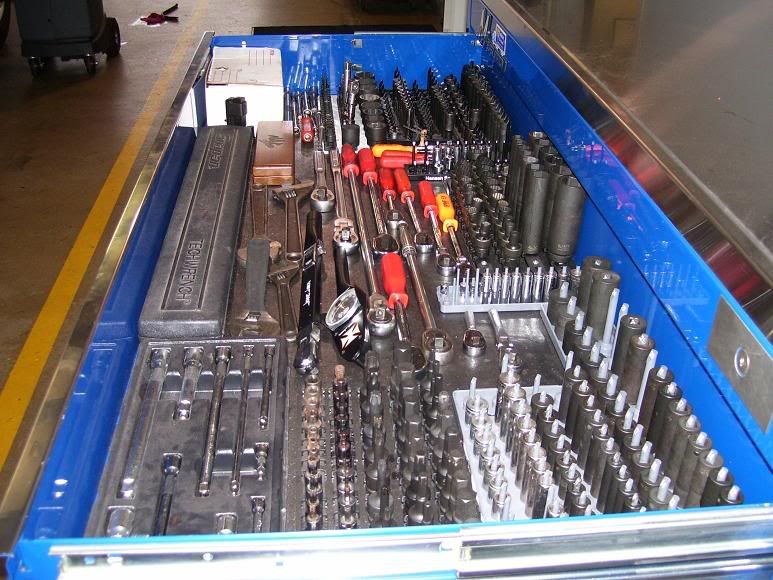
The magic bullet is really a toolbox filled with tools that is used to tune the car. When you add tools to the box, you become much more valuable and usable. 

In addition, when a player has a toolbox full of tools, they can attack any problem and be successful. Isn't that what you want for your kids?

Tuesday, October 19, 2010

Don't hijack your player

Remember growing up and being the athlete who played a sport in the fall, another in the winter and another in the spring?

What happened to that athlete?

When did an athlete become a baseball player? And why do we encourage athletes as young as 8 to be single sport all-star's? 

The other day I was talking with an athlete who usually plays baseball, but wanted to play football and is now prepping for soccer. He said he really enjoys playing all of those sports but because there are so many factors involved, he was going to stick with one sport. 

What are some of these factors?
  • Coaching pressure
  • Peer pressure
  • Parental pressure
  • Niavity
Face it, coaches can be a bit demanding. Others still are very demanding and have the potential to place an unusual amount of pressure on players. They sometimes say silly things like, "If you don't play for our team this fall, you won't be able to play on our team in the spring." I've heard it from some of our athletes. 

Now sometimes things like this are said because coaches don't want to lose the player. But sometimes the coach says this to manipulate the player into staying. Essentially saying, the only way the player's position is secure is if you don't leave. So what is a 14-year old to do?

They stay. They give up the fun the used to have playing multiple sports because they have just been "caged in" by the coach.

Other ways that players are manipulated is by peer pressure. They want to stay on the club team because their friends are all on the club team. If this is the case, then it should be the coaches responsibility to give the team some time off - a minimum of two months spread out through the year (weekends don't count!).

Parents sometimes add to the pressure by constantly talking about scholarships and college and the "pride they feel" that their child is playing on an "elite" team. Sometimes the kids don't even have to be near. But if a mom tells her friend that her 11 year-old son is planning on playing baseball in college and that comes back around to the child, there is pressure now that the child does not want to disappoint the parent. 

If you are one of these parents, make sure you let your child know that your pride in them and love for them is not based on how well they do in sports or whether or not they go to college on a scholarship. You may think your kid knows that you love them regardless of sport. But I've never seen a kid struggle with a sport because their parents say "I love you" too much. And don't just say it after a game. That's bad timing. Tell them you love them in their worst moments and in their best. Tell them always.

Kids need security. A secure child will develop an internal love for the sport if they are secure in their standing with their parents. Emotional need have to be met. Otherwise a child will play a sport simply as a means to get some attention from the parent. 

Coaches should do the same. Make sure your players know that you care about them, their future and their well being. They will be much more likely to respect you and play hard for you. One way to show them you care about their well being is to mandate some time away from the sport. 

A club coach came to me one afternoon and told me he mandated that his team take 1-month off after a heavy summer tournament season. He said the players actually didn't want the break. But he made it a requirement. A month later he said his team came back hitting better than ever. 

Why? 

They were able to decompress and unload all the pressure that had been building on them over the summer. When his team resumes practice, you can bet his team will come back hitting better than ever. 

Give them time off. Time time away and time to do something different. They will return with the vigor you saw when they first started.

Tuesday, October 5, 2010

Get big or die tryin'....

This is the weight room motto that so many high school coaches live by. They think if their players aren't getting huge, then obviously the kids are failing, not putting in enough effort and will never end up as quality athletes.

But what is this telling the kids who enjoy working out, who enjoy seeing themselves get stronger (but maybe not bigger) and who really like playing sports but happen to be a "late bloomer"? It is at this point where I think many high school coaches who supervise a weight lifting program, tend to lose their focus.

The first goal of any strength and conditioning program should be keeping their players safe and in full function. Yet so many lose focus on the fact that squatting is not JUST about lifting as much weight as possible, but is instead about TEACHING a solid movement pattern, and then slowly and progressively loading it to stimulate muscle growth.

Far too often coaches are saying, I don't care how you do it, just squat it! I have a freshmen baseball player who is working out in the mornings with his coaches and I can't believe the exercises that I am hearing they do and also the loads/weight they are using.

At such a young age, players need to develop quality movement skills instead of focusing on "getting huge." Yet coaches everywhere are concerned with their players not being big enough. Hypertrophy (increase in muscle size) is difficult to come by for even grown men. So to put that much emphasis and pressure on younger athletes is something that should not be done. 

Body builders usually have poor flexibility, chronic injuries of the shoulders and knees and are not very well equipped for sports other than posing on stage.

Encourage young athletes to get stronger, but don't be surprised if they don't get a whole lot bigger. Strength comes from the muscle(s) functioning better as a unit. Hypertrophy may be a side effect, but it should not be the outright goal. Training for muscle size has its own sport: body building.

Wednesday, September 22, 2010

6 Steps to a Better Athlete - Part 2: Agility


What is agility? If you had to explain it to a parent, could you? Sure most coaches have heard of an agility ladder, but what is it exactly that you are attempting to teach with an agility ladder?

Agility is simply the ability to accelerate for a given distance, decelerate, change direction and re-accelerate.

Teaching agility doesn't require any fancy tools or devices, just a sound understanding of what it is and what physiological principle it relies on. Once that is understood, the practical application of that principle is a piece of cake.

Agility relies on the same principle as plyometric exercise does: the stretch shortening cycle (SSC). The SSC is a series of actions that occur within a muscle. When a quick stretch is placed on a muscle it will contract quicker than if the muscle were held in a stretch and then shortened. 

This is not to say that you train agility in the same way that you train for jump height, just that the principle is the same. Basically, the muscle can contract quicker when it is quickly stretched and then released with a muscle contraction. 

Here is a way i explain it to our young athletes. I got this from Mark Verstegen and it is a terrific way to explain it to kids and parents alike. 

Place your hand flat on your chest with your palm against your chest. Now lift your middle finger down and slam it against your chest as hard and as fast as you can. Pretty quick. But now what I want you to do is take the thumb from your other hand and lift the middle finger of the hand that is on your chest to a quick stretch and then move your thumb. That middle finger comes down a lot quicker. 

The thing is, you didn't have to think about it. Instead the mechanics of the muscle caused it to contract quicker. So in a practical sense, you have to teach the muscle to move faster. 

However, there is one thing that must be considered when training for agility: deceleration. Being able to hit full speed and then decelerate is a very complex skill, one that most kids do incorrectly in a sport setting. 

Now most deceleration takes place by loading only a single leg as that leg is planted and then pushed off of in another direction. One exercise you can do to improve deceleration and strength is a single leg hop to squat

Have your players balance on a single leg then jump up. As they come back down have them sink into a single leg squat and tough their shoe laces. This should really open your eyes as to which kids are going to be the most agile. 

Athletes basically have to slow themselves down like a car going from 60-0 mph. This means not only controlling their own body weight, but also controlling the inertia created by their body weight. 

Another exercise that you can use is a lateral bound to squat. This is a similar exercise but focuses more on lateral deceleration. I hope your catching the major concept of agility here. 


To perform the lateral bound, have the athlete balance on a single leg and then jump laterally to the other leg, where upon landing they will squat and touch their shoe lace. Now remember that a squat must come from the hips. If the athlete simply bends at the waist, then this is not going to be very effective and will actually encourage a bad, BAD habit.

Continue to enforce control upon landing, making sure that the foot is perpendicular to the direction of travel. This will make sure the glutes are used in both deceleration and reacceleration.

Stay tuned for the next post as we talk about rhythm and how to incorporate it into your practices for improved movement, speed and agility!

Tuesday, September 21, 2010

Is a pitcher REALLY an athlete?

A lot of people have a difficult time justifying the use of the word "athlete" when it comes to pitchers. There logic states that if a guy can be 40 lbs overweight and be a "professional" is it really an "athletic" position? Or is it simply an athletic skill? 

In other words, what does it really take to be a pitcher?

If we watch pitchers, most of the time they simply chuck and duck. But then consider what they need to be able to do after they duck: they may have to field the ball, sprint to first, sprint to back-up home or even dive to get out of the way of a ball.

That's quite a lot! 

So we've identified what a pitcher has to be able to do in addition to throwing. And there are many great pitching coaches who can teach a player how to pitch. But do coaches ever work on actually playing the position?

That is something that may require a bit more skill. When you have to react that quick, that infrequently, there may be some additional training that is necessary. First off, simply reaction time is start. But don't go trying to hit line drives right at your athletes for the sake of reaction time training. There are safer ways to go about it

The second part of this should be footwork and foot speed. Improving a pitchers foot speed is paramount in allowing them to react quickly to the ball as well as find the bag when covering first or field a ball that comes to them. 


These are very underrated qualities in a pitcher. Many people tend to forget that as soon as the ball leaves his hand, he is a position player. As such, his training should reflect that. Foot speed can be developed by using low boxes, agility drills, ladder drills, partner mirror drills and rapid response-to-sprint drills.


At Pair & Marotta Peak Performance this is what we do. We train players to be athletes, not just pitchers. We currently have our Off-Season Baseball/Softball Training Camp that meets on Monday, Wednesday and Friday's from 3:30-5pm. If you've got the desire to improve your foot speed, reaction time and agility, then we've got the program that will do it.


For more information, contact me at aaron@pairmarotta.com or call 661-912-9991.

Tuesday, September 14, 2010

6 steps to a better athlete: Part 1 - how do they learn?

There are multiple parts to agility: rhythm, coordination, balance, flexibility, body awareness, reaction time. All of these can be trained to improve ANY athletes performance. But how?

For the next 2-weeks I am going to take you through the importance of each of these components so that you can take these concepts and use them in your practices.


But to start we need to learn how an athlete learns a skill. 


First off, there are different types of learning styles. Some people are visual learners that learn by watching, others learn by listening or reading. And still others learn by doing. However, most people and especially kids, are a good combination of the 3. 


My experience has shown me that as kids get older they tolerate, appreciate, and pay more attention to audible teaching. However, younger kids (under12) tend to be more visual and kinesthetic learners (do-ers). 


For younger athletes they are at such a prime age that their brain is ripe for basically writing codes for how to perform a movement. So expecting perfection within the first few attempts is not realistic. They know what it should look like (visual learning) and they then try to mimic that movement. 


However, since there is no prior motor program for this movement skill, it's bound to look a little sloppy. But give them time. This is the one thing I see so many coaches focus on: immediate success. With the pressure to be perfect you can almost assuredly push a youth athlete away from a sport. Let them learn from movement. 


When they appear to be struggling, help them move through the motion. Put their body in the correct position. As I stated in the previous post, you have to groove a quality movement before you can expect perfection. With that being said, learning is not immediate. Heck , it may take 2-4 weeks or longer before a movement is learned. 


But stay away from simply rehearsing the one skill. Research shows that kids learn better in short bursts of information rather than one massive "info-bomb." Spend 5-10 minutes on a skill, then move to another. Then come back to it. You'll keep attention much better and as a result improve retention of the skill.

Thursday, September 2, 2010

Groovin' the movement

This is a quick post about learning. Many, many parents of athletes, particularly baseball and softball, choose to use weighted balls and bats in order to "make their kids stronger." 


On the surface, this makes sense. But if you look a little deeper into what there body is learning to do, you'll see that often that the intricate  motion of throwing is changed when a heavier ball is used. 

Nobody follows through like that at the plate!
Watch a player swing a bat with a donut on it, does that swing look like the swing they are going to take when they walk to the plate?  From watching youth baseball, I would hope that player doesn't take his "on-deck weighted" swing with him to the plate!

The same principle needs to be used when teaching movement to younger athletes. They are at such a prime learning age, it makes no sense to refine mechanics and then all of a sudden switch to a heavier or lighter weight that might disrupt that pattern.

What we do in our sports training is similar in concept. For kids up to age 12-13, we do minimal weight lifting. instead we focus on developing body control and awareness through body weight exercises. Then we simply try to groove the correct movements into a motor skill that can be executed without thought, essentially making the movement a "sure thing."

In summary, if you've got a younger athlete who appears to be excelling in a given sport or movement, don't confuse them by throwing another variable at them. Instead, groove that quality pattern, keep refining it over and over. Then when they get to 14-15 years old, then we can start adding some external resistance.